You can do HIIT and weights on the same day if you recover well
If you're already used to both, combining HIIT and weight training on the same day can work. Put your main goal first: lift first when strength is the priority, or do your key interval session first when conditioning matters more. Separate demanding sessions when your schedule allows, and reduce the second one if it compromises your training.
If you're new to exercise, start gradually rather than stacking two hard workouts. With a chronic condition, get advice on appropriate activity; if you've been inactive, check with a clinician before starting vigorous exercise. CDC guidance explains these limits.
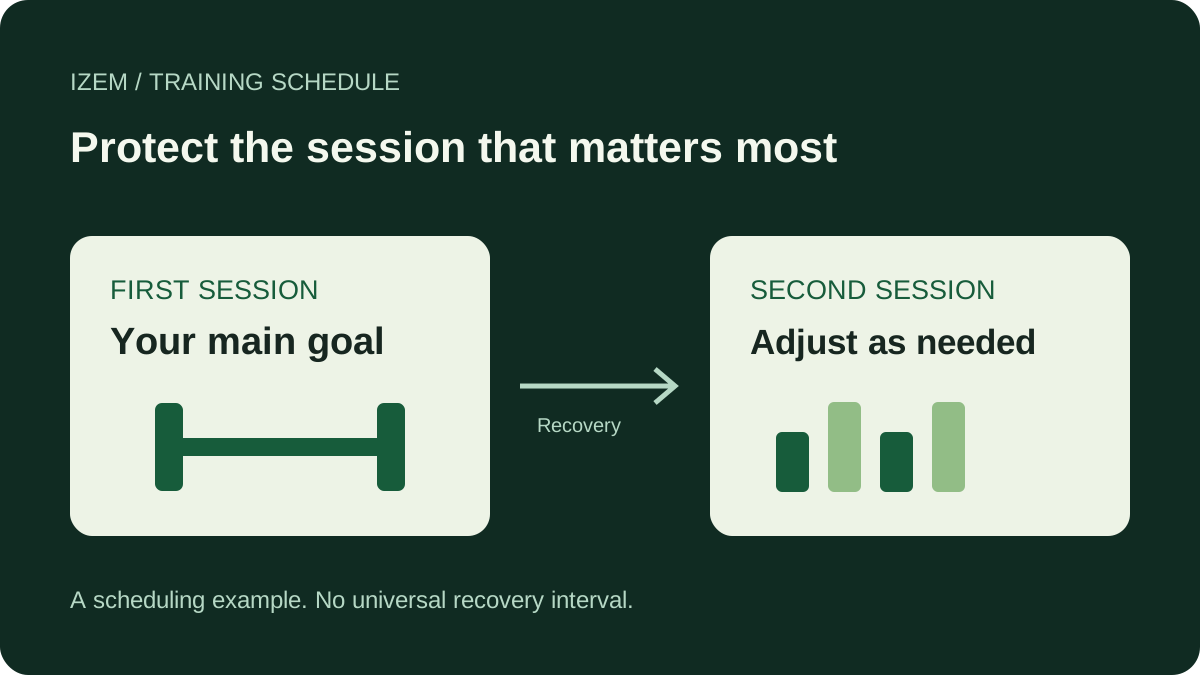
Choose the order around the workout you want to protect
A hard session can leave you tired for the next one. The practical question is which performance matters most today. Use that to choose your order, then look at how you actually perform.
| Your priority | Start here | What to watch |
|---|---|---|
| Strength or muscle | Do your planned lifting first. Keep any later intervals within what you can recover from. | Missed reps, unexpectedly difficult working sets, or a decline at the next comparable lifting session. |
| A key conditioning session | Do the intervals while fresh. Adjust or move the later lifting if you're too tired to perform it well. | Whether you can complete the intended interval work and still control your lifts. |
| General fitness with limited time | Choose one main workout. Add the other only if it fits without rushing rest, technique or recovery. | Whether the arrangement is repeatable across your week. |
This is a planning starting point, not proof that one order produces better results for everyone. A nine-week study in moderately active men found similar strength and lean-mass improvements with either order when the sessions were about three hours apart. Some power outcomes differed.
One gym visit and two separate sessions are different choices
If you can lift in the morning and do intervals later, the gap gives you a chance to rest, eat and drink before starting again. That can be useful when both sessions need quality effort. It doesn't make an excessive total workload manageable.
There's no single recovery interval this evidence establishes as enough for every person. Research has examined sessions roughly three hours apart, and a review of concurrent training found more interference with explosive-strength development in the same session than in a subgroup separated by at least three hours. That's a study comparison, not a guarantee that a three-hour break protects every outcome.
With one visit, protect enough time for your warm-up, lifting rests and a gradual finish. If that leaves no room for a useful interval session, move it. You don't need to turn every lifting day into a combined day.
A worked scheduling example
Suppose you already lift regularly, your main goal is strength, and you have one hour before work. Keep the lifting session you've planned. If fitting HIIT means cutting your normal rests or hurrying the last exercises, put the intervals on another available day. Easy cardio is another option when you want some movement without a second hard session.
If you instead have a morning lifting window and an evening interval window, you could try that arrangement without increasing either session's usual workload. Record how both went and how you feel at your next planned workout. These are scheduling examples, not a prescribed training program.
HIIT isn't a label for every fast workout
Here, HIIT means hard aerobic intervals separated by recovery, such as repeated efforts on a stationary bike. An easy warm-up or steady walk has a different demand. A circuit of loaded exercises with short rests also adds resistance work, so count those exercises when judging how much lifting you're doing.
That distinction matters after leg training. Bike intervals, sprinting and a jump-squat circuit all involve the legs, but they aren't interchangeable sessions. Use an activity you already know and can perform well; don't add unfamiliar explosive movements simply because a workout calls them a finisher.
Will doing both cost you muscle or strength?
A 43-study review did not detect an average reduction in muscle growth or maximal-strength gains compared with matched strength training alone. Explosive-strength gains could be reduced, especially when the activities shared a session. Those averages don't guarantee the same outcome for every program.
A separate review focused on training status found smaller lower-body strength gains in trained people, particularly with same-session training. If you're an experienced lifter prioritizing lower-body strength, or an athlete training power, be more cautious about combining demanding sessions.
Workout order also isn't a reliable shortcut to fat loss. Keep the arrangement that lets you train consistently and recover. For the wider training-and-food decisions, see our body recomposition guide.
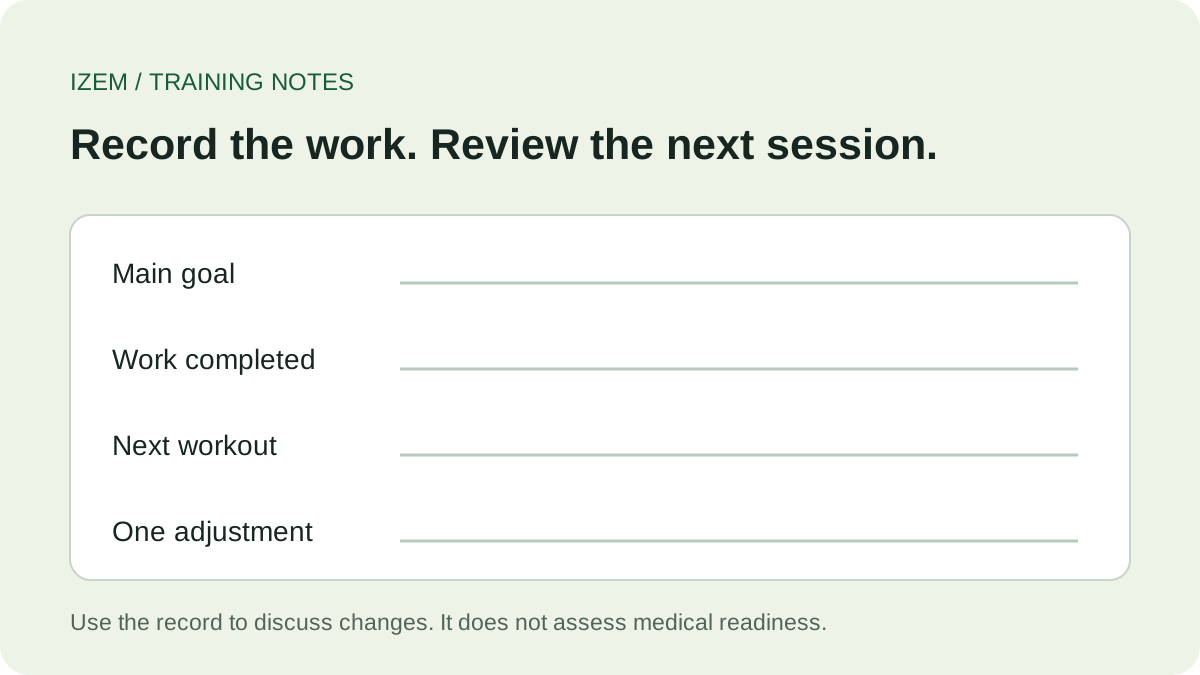
Use your next workout to judge the combination
Keep a short record instead of judging the plan by how exhausted you were. Copy this into your training notes:
Date and main goal:
Lifting: start time, exercises, loads, reps and effort
Intervals: start time, activity, hard efforts and recoveries
Any unusual fatigue or pain:
Next comparable workout: planned work versus completed work
One adjustment for next time:
If the same lifting work keeps getting harder or you repeatedly miss the intended interval effort, reduce or move the second session before adding more. Also consider changes in sleep, food, stress and the rest of your training; one difficult day doesn't identify the cause.
Don't push through pain to finish the combination. Pain and persistent symptoms need an appropriate assessment, rather than another schedule adjustment.
For the lifting side, our progressive overload tracker helps you compare planned and completed work. IZEM's training features include plans based on your schedule and equipment, set and rep logging, and supported workout changes. Describe the extra interval work when asking for coaching guidance; its coaching is general fitness guidance and doesn't replace a clinician or an in-person technique assessment.
Watch the video guide
A short IZEM video guide for the decisions in this article.
Sources and limits
- Lee and colleagues, 2020: same-day training order. Twenty-nine healthy, moderately active men trained for nine weeks. The two concurrent-training groups separated their sessions by about three hours. A small, specific population; this does not establish an ideal schedule for everyone.
- Schumann and colleagues, 2022: concurrent aerobic and strength training. Systematic review of 43 studies. Aerobic protocols varied; its findings should not be read as a guarantee for every HIIT routine.
- Petré and colleagues, 2021: training status and maximal dynamic strength. Systematic review and meta-analysis of 27 studies, focused on lower-body strength.
- CDC: Adding Physical Activity as an Adult. Guidance on activity choices and when to consult a doctor.
General fitness information for adults. Scheduling examples are hypothetical and weren't tested by IZEM.