Watch the video guide

A short IZEM video guide for the decisions in this article.
Quick answer: choose Gravl for a close adaptive-strength alternative, Alpha Progression for more structured progression, Hevy for tracking plus social/watch features, Boostcamp for a large free program library, Ladder for human-coach-led follow-along training, and IZEM if the problem is not workout generation but actually following through and coordinating training with practical meal planning. If Fitbod’s current adaptive workouts work well for you, staying with Fitbod is a perfectly reasonable choice.
The shortlist at a glance
| App | Best fit if you want… | Planning style | Main trade-off to consider |
|---|---|---|---|
| Gravl | Adaptive strength workouts that react to your gym, schedule and logged training | AI-driven strength plan with automatic progressive overload | Still a training-first product; decide whether its workflow fits your broader accountability needs |
| Alpha Progression | A stable hypertrophy/strength plan with explicit progression, RIR, periodization and deload tools | Structured plan generator with set-level progression recommendations | Less centered on rebuilding every session around changing circumstances |
| Hevy | A polished logger with social, web and wearable support plus generated programs | Tracker-first; Hevy Trainer generates programs and progression suggestions for Pro users | Its generated plans are algorithmic, and Hevy says they are not AI-generated |
| Boostcamp | Free access to a very large library of programs plus a serious workout tracker | Program-library and tracker model, with auto-progression in supported programs | You choose a methodology instead of asking an adaptive engine to invent each session |
| Ladder | A real coach, weekly programming and in-ear guidance during workouts | Coach-created daily/weekly training plans | Different model from Fitbod: you are joining a coaching plan rather than using an adaptive session generator |
| IZEM | Proactive accountability tied to workouts, practical meals, review and adaptation | AI coaching software with personalized plans, progress review and proactive two-way voice calls | Best fit when follow-through is the bottleneck; it is not positioned as a replacement for qualified medical or clinical care |
Before switching, be fair to what Fitbod actually does now
A lot of comparison pages describe Fitbod as if it were only a random workout generator. That is outdated. Fitbod’s current documentation says its workouts use your goal, experience level, available equipment, training split, workout preferences and logged history. It also uses muscle-recovery estimates and adjusts sets, reps and weight from performance.
Fitbod also says skipped, replaced, deleted and manually added exercises can influence future recommendations. In other words, if your complaint is simply “Fitbod does not adapt,” that is not a strong reason to switch. The better question is what kind of adaptation or coaching do you wish it handled differently?
Fitbod’s official subscription page currently lists US pricing at $15.99 monthly or $95.99 annually, while noting that prices can vary by region, platform and promotion. Price can be a valid reason to compare alternatives, but it should not be the only one.
The Switch-Reason Test
Start with the sentence you would use to explain why you are leaving. Then choose the app built around that job.
Start with Gravl. It is the closest match in this shortlist to the core “plan the workout for me” job.
Start with Alpha Progression. Its current feature set emphasizes plan structure, RIR, periodization, deloads and progression recommendations.
Start with Hevy. If you already know what to train, a tracker-first product can be simpler than another adaptive coach.
Start with Boostcamp. Its official site currently advertises 11,000+ free programs plus core tracking tools.
Start with Ladder. It is built around coach-created plans, in-ear coaching and access to coaching teams.
That is the IZEM use case: proactive accountability plus workout planning, practical meal planning, review and adaptation.
1Gravl: closest fit for adaptive strength planning
Gravl’s current first-party site says it builds strength plans around goals, equipment and schedule, tracks recovery, adapts workouts to the gym you are in and recalculates progressive overload after logged training. It also supports Apple Watch, Wear OS and Garmin workout use.
Choose Gravl if: you like Fitbod’s basic idea — software should make strength-programming decisions for you — but want to compare a different adaptive engine and workflow.
Do not switch just for novelty: both products are trying to solve a similar planning problem. The meaningful comparison is how each handles your equipment, exercise preferences, progression and day-to-day changes.
2Alpha Progression: best for explicit progression structure
Alpha Progression’s current site centers on a customizable plan generator, progression recommendations, RIR, periodization, deloads, multiple gyms and detailed analysis. That is useful if you are tired of feeling that each workout is a fresh black box and would rather see a stable plan with clearer progression logic.
Choose Alpha Progression if: hypertrophy or strength progression is the main job, and you want more visible structure across weeks rather than maximum session-to-session variability.
3Hevy: best if you mainly want tracking, social and wearables
Hevy is no longer fair to describe as “only a logger.” Its current Hevy Trainer feature can generate a program from goals and preferences for Pro users, and it can recommend when and how much to increase weight based on performance. Hevy explicitly says those generated programs use an algorithm rather than AI.
Choose Hevy if: the logging experience, progress views, social layer, web access and wearable ecosystem matter more to you than having an AI rebuild training around recovery every day.
If you are choosing specifically between those two products, see our separate IZEM vs Hevy comparison rather than treating this roundup as a head-to-head review.
4Boostcamp: best free program-library option
Boostcamp’s current first-party pages advertise 11,000+ free programs alongside workout tracking, RPE/RIR logging, rest timers, a plate calculator and basic personal-record tracking. Its model is useful when you do not want an algorithm inventing every session; you want to pick a credible training methodology and run it consistently.
Choose Boostcamp if: your main objection to Fitbod is cost or black-box session generation, and you would rather choose from established programs while still having a capable tracker.
5Ladder: best for human-coach-led follow-along training
Ladder’s current site says its daily workouts are created by expert coaches, refreshed weekly and delivered with video demonstrations, in-ear coaching, pacing and coach access. That makes it a fundamentally different alternative from Fitbod.
Choose Ladder if: you want a human coach’s programming and voice inside the workout, and you prefer joining a coaching style/team over having an algorithm generate each session from your inputs.
6IZEM: best when the real problem is follow-through
Some people do not need a smarter set-and-rep generator. They need the plan to survive a busy week.
IZEM is built around personalized workout planning, practical meal planning, progress review, adaptation and accountability. The coach can use proactive two-way voice calls before workouts or for day review, and can adapt around schedule, equipment, training level, goals, recovery, consistency and plan changes. It also supports food, body-progress and gym-equipment scanning as coaching context; those scans are not medical diagnostic tools.
Choose IZEM if: you have repeatedly had good plans but missed workouts, stopped logging, drifted from meals or failed to adjust after real-life changes. See how proactive AI voice calls work and how workout-aware meal planning fits into the same loop.
Do not choose IZEM just because it has more features: if you are consistent already and only want a strength-programming engine, Gravl, Alpha Progression or Fitbod itself may be the cleaner fit.
What current Fitbod complaints can — and cannot — tell you
Recent public Fitbod subreddit threads include complaints about UI changes, bugs, repetitive or surprising recommendations and the amount of manual swapping some users feel they need to do. Those posts are useful because they reveal switch reasons, not because they prove Fitbod is broken for everyone.
Fitbod itself posted in May 2026 that parts of the app experience had not been where the team wanted them, described fixes to HealthKit-related issues and said larger algorithm updates were in development. That context matters: a complaint from January is not necessarily a current product limitation in September.
Which Fitbod alternative should you pick?
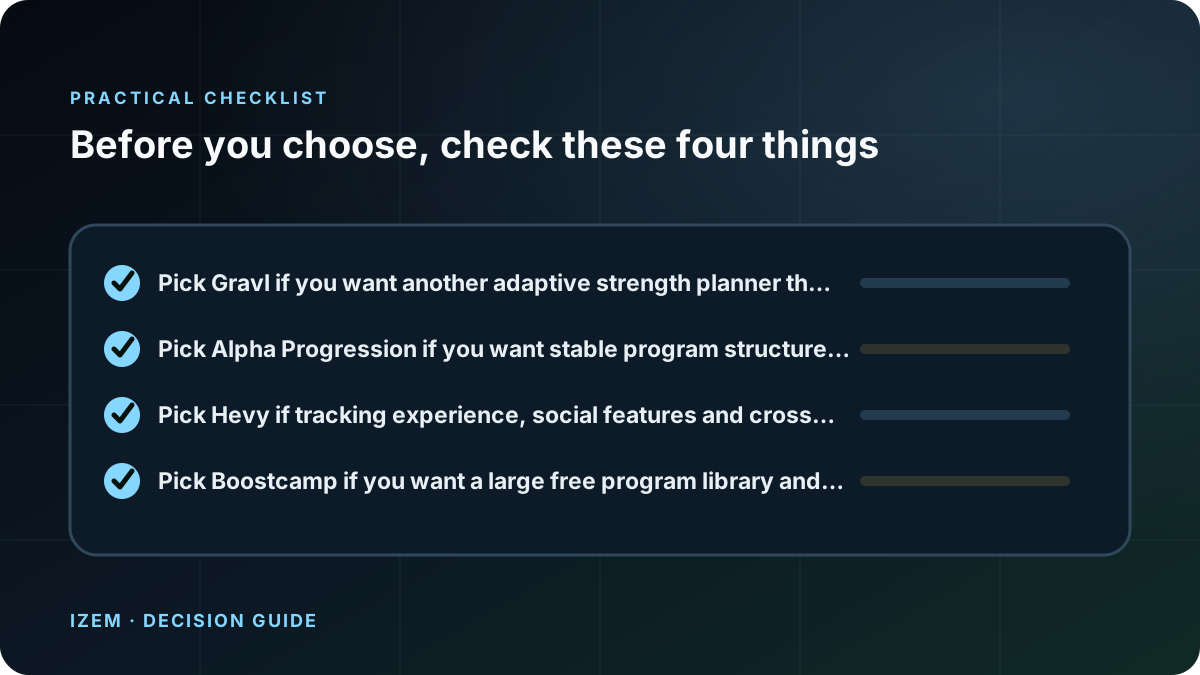
- Pick Gravl if you want another adaptive strength planner that handles gym/equipment changes and progressive overload.
- Pick Alpha Progression if you want stable program structure and explicit progression tools.
- Pick Hevy if tracking experience, social features and cross-device use are the priority.
- Pick Boostcamp if you want a large free program library and solid logging.
- Pick Ladder if you want a real coach’s weekly plan and in-ear workout guidance.
- Pick IZEM if you need proactive accountability across training, practical meals and plan adaptation.
- Stay with Fitbod if its current adaptive training model is working and none of the alternatives fixes a real problem for you.
FAQ
What is the best Fitbod alternative in 2026?
There is no universal winner. Gravl is the closest fit here for adaptive strength planning; Alpha Progression is stronger for visibly structured progression; Hevy is a strong tracker/social choice; Boostcamp is compelling for free programs; Ladder is built around human coaches; and IZEM focuses on proactive accountability tied to workouts and practical meal planning.
Which app is most similar to Fitbod?
Gravl is one of the closest alternatives in this shortlist if what you want to preserve is adaptive strength programming. Both products plan workouts from personal inputs and logged training rather than acting only as passive logs.
Should I switch from Fitbod if its recommendations sometimes look strange?
Not automatically. First check your equipment, plan preferences, training split, exercise feedback and recent logs. Fitbod says these inputs affect future recommendations. If the problem keeps repeating after your settings and feedback are correct, then compare alternatives based on that specific failure mode.
Which Fitbod alternative is best for accountability?
Ladder is a strong option when you want coach-led training and in-ear guidance during workouts. IZEM is designed for proactive AI accountability, including two-way voice calls, progress review and adaptation around real-life plan changes.
Related comparisons and tools
Sources checked September 18, 2026
- Fitbod Help Center — How Fitbod Creates Your Workout
- Fitbod Help Center — sets, reps and weight recommendations
- Fitbod Help Center — subscription options
- Gravl — official product site
- Alpha Progression — official product site
- Hevy Help Centre — Hevy Trainer
- Boostcamp — free workout app and program library
- Ladder — official product site
- Fitbod subreddit — September 2026 UI complaint thread (anecdotal)
- Fitbod subreddit — January 2026 switching thread (anecdotal)
Competitor products change quickly. We use current first-party documentation for feature claims when available and label community reports as anecdotal. IZEM product claims are limited to the site’s verified product-facts contract.
Leaving Fitbod because the plan is not the problem?
If you already know what a good workout looks like but keep missing sessions, drifting from meals or failing to adjust when your week changes, compare a different kind of solution: proactive coaching that follows up.
Explore IZEM See the accountability callsIZEM provides general fitness and nutrition coaching software, not medical diagnosis or treatment.