Reality fit
Does the plan account for schedule, budget, prep time, grocery access, and meals away from home?
IZEM builds practical meal plans around your goals, preferences, schedule, food context, and training week. The point is not a perfect diet sheet. The point is a plan that can survive Tuesday.
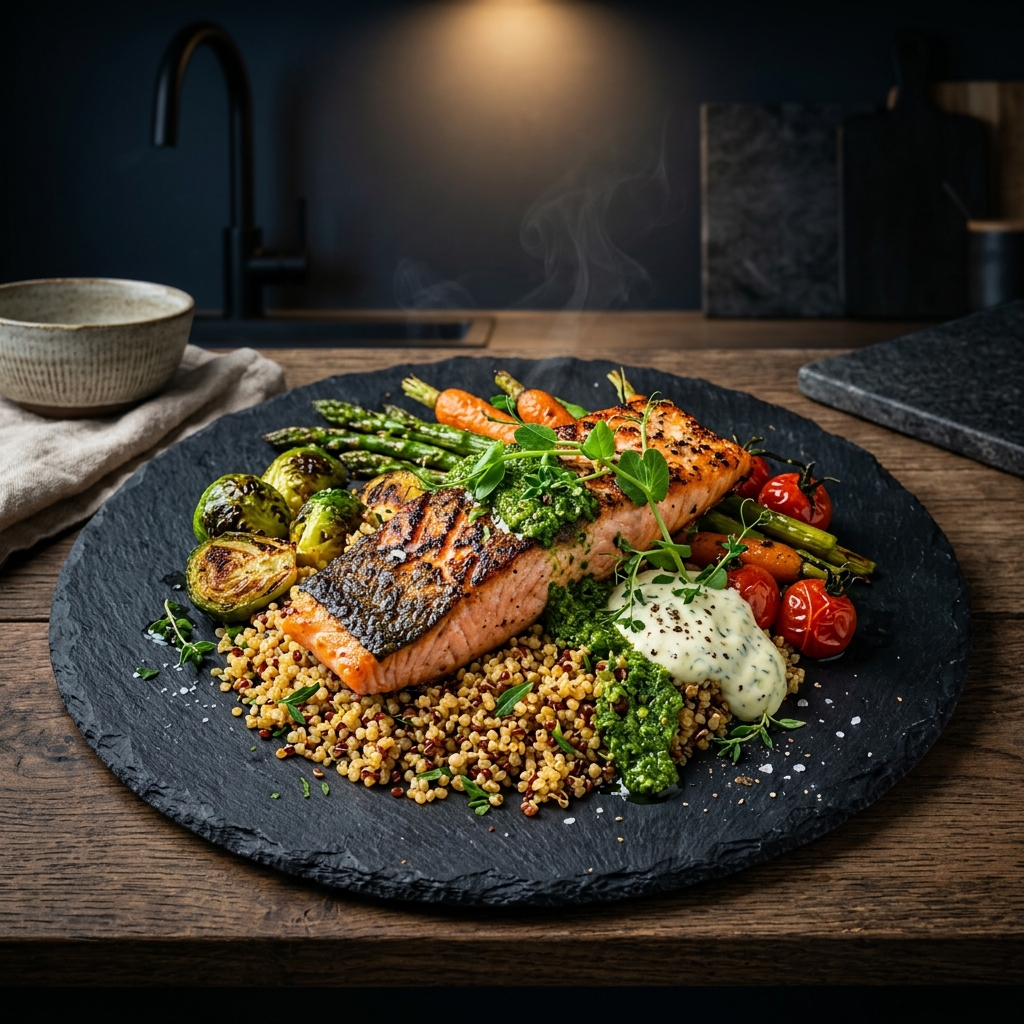
Direct answer: an AI meal planner is useful when it connects nutrition to real life: your goal, macro targets, food preferences, schedule, grocery access, workouts, and what happened today. IZEM is built as a premium AI personal trainer, so meal planning sits inside the same loop as workouts, scans, day reviews, optional calls, and weekly adaptation.
Health scope: IZEM provides general fitness and meal-planning support. It does not diagnose conditions, treat disease, prescribe medical diets, or replace a registered dietitian or clinician. Food scans and calorie estimates should be treated as planning signals, not clinical measurements.
Most meal planners answer the easiest version of the question: "What could I eat?" That is helpful for recipe discovery, but it does not solve the harder problem: "What should I do this week, given my workouts, schedule, preferences, food access, and missed days?"
A realistic plan needs context. A higher-volume training week may need different recovery support than a deload week. A late meeting changes dinner. A grocery gap changes lunch. A meal you hated should not quietly return next week because the app forgot you said no.
That is why IZEM treats meal planning as part of coaching, not a separate recipe generator. The meal plan can respond to workouts, food scans, day reviews, body-progress context, preferences, and weekly adaptation.
Use this four-part framework to judge whether an AI meal planner can support the week you actually live.
Does the plan account for schedule, budget, prep time, grocery access, and meals away from home?
Does it understand the training week instead of treating nutrition as a disconnected checklist?
Can the plan change after missed workouts, messy meals, unavailable foods, or low-energy days?
Can scans, reviews, or quick notes reduce manual tracking without pretending estimates are perfect?
IZEM can align meal structure with goals such as muscle gain, fat loss, maintenance, or body recomposition while keeping expectations realistic.
Culture, dislikes, meal timing, cooking confidence, budget, and routine matter because the best plan is the one you can repeat.
Food scans, daily reviews, body progress scans, and workout history give the coach more useful context than a static recipe list.
| Option | Best for | Where it often fails | What to check before paying |
|---|---|---|---|
| Calorie tracker | People who want detailed manual food records. | High logging effort and little help deciding what to do after a difficult day. | Database quality, privacy, export options, and whether tracking feels sustainable. |
| Meal-prep template | People with stable schedules who like repeated meals. | Rigid plans break when grocery access, appetite, travel, or time changes. | Swap options, prep time, leftovers, and realistic grocery planning. |
| Standalone AI recipe planner | People who mainly need recipe ideas. | The app may not understand workouts, recovery, missed days, or weekly accountability. | Whether it can remember preferences and adapt beyond recipe generation. |
| IZEM AI meal planning | People who want meals connected to workout plans, food scans, day reviews, and weekly coaching. | It is not medical nutrition care and should not be used as a clinical diet prescription. | Whether you want a broader premium AI personal trainer for around $24.99/month, with the annual plan as the best value. |
A good meal planner should not punish you for the week that happened. It should help you identify the planning bottleneck and adjust one thing.
Weekly meal review
1. Which meals were easiest to repeat?
2. Where did the plan fail: groceries, prep time, schedule, cost, taste, or rigidity?
3. Did training change hunger, timing, or recovery needs?
4. What food scan or day-review note should the coach remember?
5. What single adjustment would make next week easier?
6. What is the first grocery, prep, or calendar action?
For a copyable version with a local browser generator, use the weekly nutrition check-in template. If you are choosing an all-in-one app, compare the full workflow in the workout apps with meal plans guide.
Food scanning is useful when it lowers friction. You can take a photo, get an estimate, and let the coach use that context for the rest of the day. That is different from pretending a photo is a lab-grade measurement.
The healthiest use is trend-aware and practical: roughly what did you eat, what pattern does the coach need to remember, and what adjustment would make the next meal or next week easier?
Useful meal planning often comes down to unglamorous basics: what food is available, how much time you have, whether leftovers fit the week, and whether the grocery list supports the plan. The USDA MyPlate planning guide is a practical public reference for those steps. Read the MyPlate meal-planning guide.
For broader nutrition guidance, use current public-health resources such as the Dietary Guidelines for Americans. IZEM helps with behavior, planning, and fitness context; it is not a substitute for individualized clinical care.
No. IZEM is a premium AI personal trainer that combines workout planning, meal planning, food scanning, body progress scanning, gym equipment scanning, day reviews, coach memory, optional proactive calls, and weekly adaptation.
That is where coaching matters. The useful question is not "Did you follow the plan perfectly?" It is "What should change so the next meal, next day, or next week is easier to execute?"
Calculators can be useful rough planning tools. Start with the TDEE calculator and macro calculator, then use weekly evidence instead of treating any estimate as permanent truth.
IZEM helps connect workouts, meal plans, food scans, progress scans, day reviews, coach memory, and optional calls so you do not have to figure out every adjustment alone.