Watch the video guide
A short IZEM video guide for the decisions in this article.
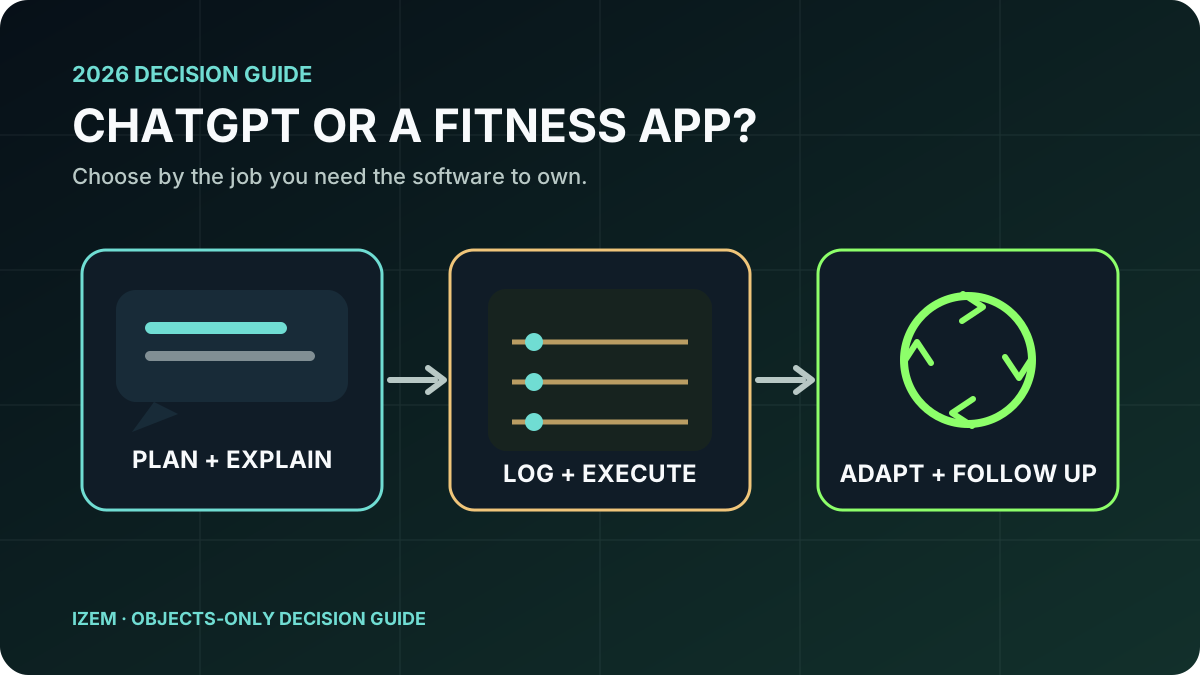
Quick answer: use ChatGPT alone if you mainly want ideas, explanations or a plan you are comfortable managing yourself. Use ChatGPT with a connected workout app if you like the general assistant but want structured training history and a gym-friendly logger. Use a dedicated fitness coaching app when you want the product itself to own more of the execution loop, such as planning, review, adaptation and accountability.
Older comparisons often draw the line too neatly. They say a chatbot can talk while a fitness app can track. That is no longer a reliable description of the market.
OpenAI now offers Health in ChatGPT to eligible adult users in the United States, with permission-based access to sources such as Apple Health and supported medical records. OpenAI also says that connected Health data is read-only and that Voice mode does not currently support connected apps or plugins. Separately, fitness products can connect their own structured data to ChatGPT. Hevy's current ChatGPT plugin, for example, can expose workout history, help generate plans and save routines back to a Hevy account.
So the 2026 decision is more interesting: how much of your training system should live in a general assistant, and how much should live in software built around workouts?
The boundary changed: ChatGPT can connect to fitness data now
A general AI assistant used to be mostly a blank conversation. You described your goals, pasted a few numbers, received a workout, and then had to carry the plan into whatever tool you used at the gym. That workflow still exists, but it is no longer the only one.
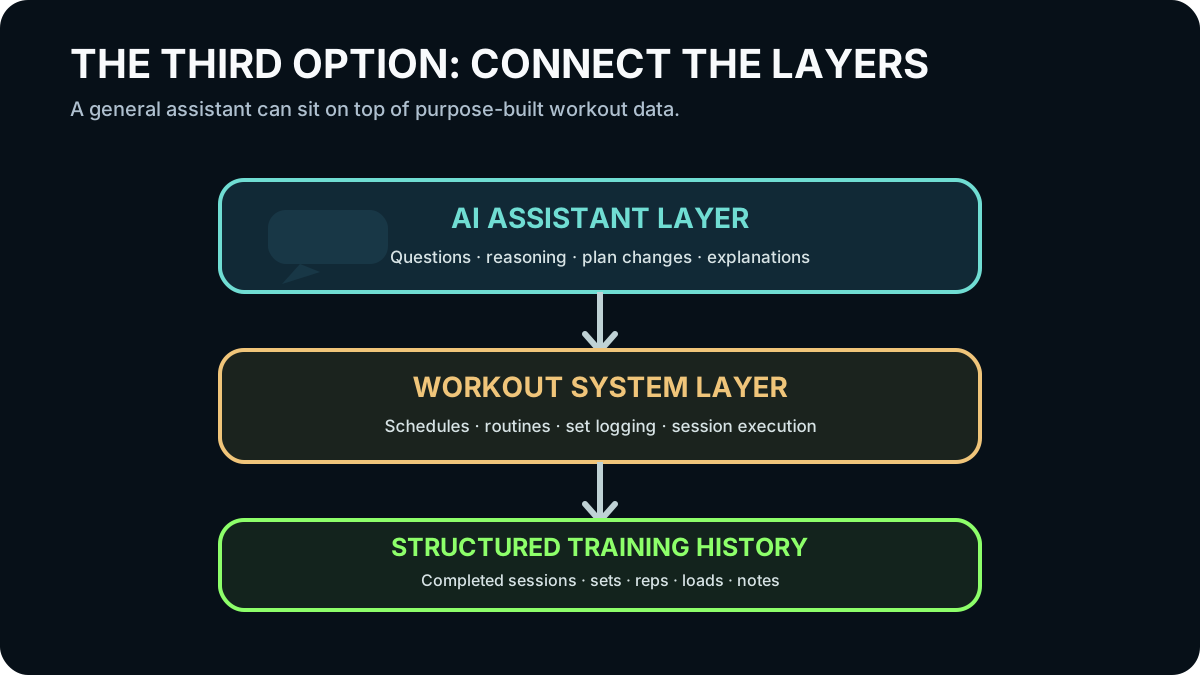
Plugins and connected health sources can give a chat useful context. Hevy's September 2026 plugin is an especially important example because it lets a user ask ChatGPT about actual workout history and save generated routines to the workout app. Other products are building similar bridges between a general assistant and structured training records.
This makes one common claim obsolete: “ChatGPT can never see your workout history.” Sometimes it can. The right question is whether the exact setup you use has access to the exact data you need, whether that data stays structured, and whether the action you want can be written back to the fitness system.
That distinction matters because a conversation and a training system have different jobs. A language model can be very good at reasoning about a program while still leaving you to manage the calendar, execute each set, record performance, and decide when the plan should change.
Compare the job, not the AI label
“AI fitness” now covers several different architectures. This table is a more useful comparison than asking which product has the smartest chatbot.
| Job | ChatGPT alone | ChatGPT + connected workout app | Dedicated fitness coaching app |
|---|---|---|---|
| Create a starting workout | Strong fit if you provide goals, experience, equipment and schedule. | Strong fit, with the advantage that some integrations can save the plan into the tracker. | Usually built into onboarding or plan generation. |
| Run the session set by set | You usually need to manage the workout yourself or use another surface. | The connected workout app can provide the focused logger, timers and history. | Often part of the product's workout experience. |
| Use past workout data | Depends on what you provide or connect. Do not assume every past set is automatically available. | Can be strong when the integration exposes structured training history. | Can use the data stored inside its own training system, depending on the product. |
| Adapt after a missed workout | Good at reasoning once you tell it what changed. | Potentially better if the connected app exposes the missed session and schedule context. | Some products are designed to adapt the plan as part of the normal workflow. |
| Proactive accountability | Usually depends on features and automations you explicitly configure. | Varies by the connected app. | Some products are built around reminders, check-ins or proactive coaching. |
| Nutrition + training in one loop | Possible when you supply or connect enough context, but the workflow can span multiple sources. | Depends on what the connected app actually exposes. | Some products intentionally combine workout and meal planning. |
A five-job test before you choose
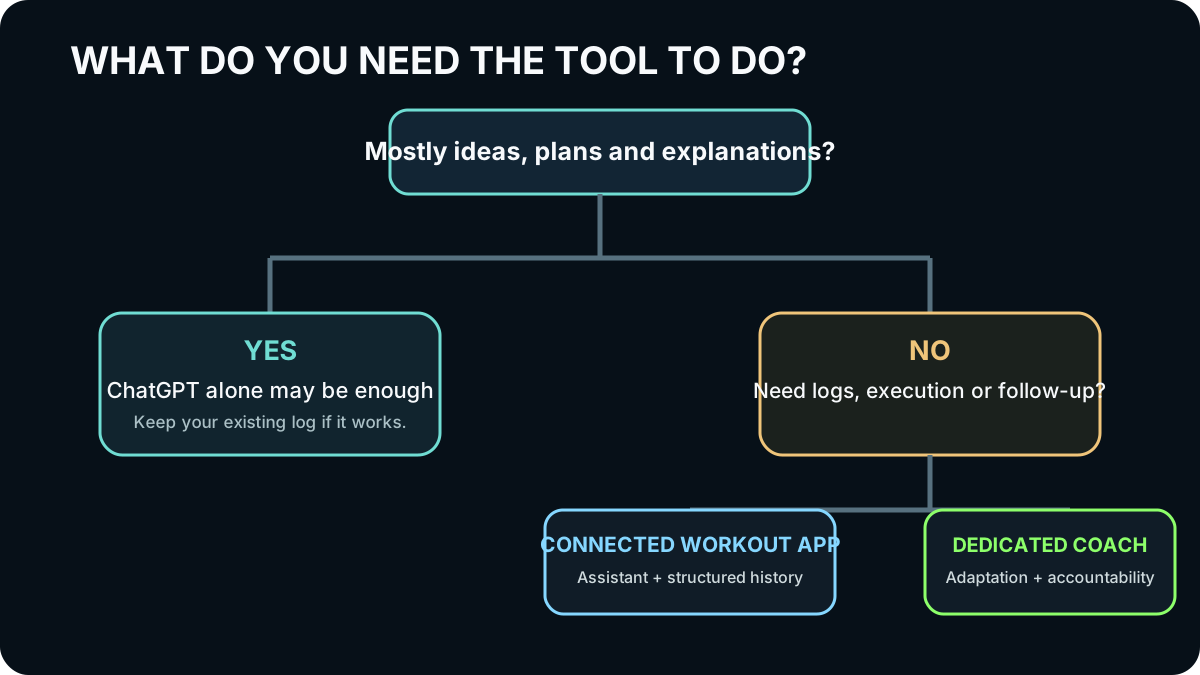
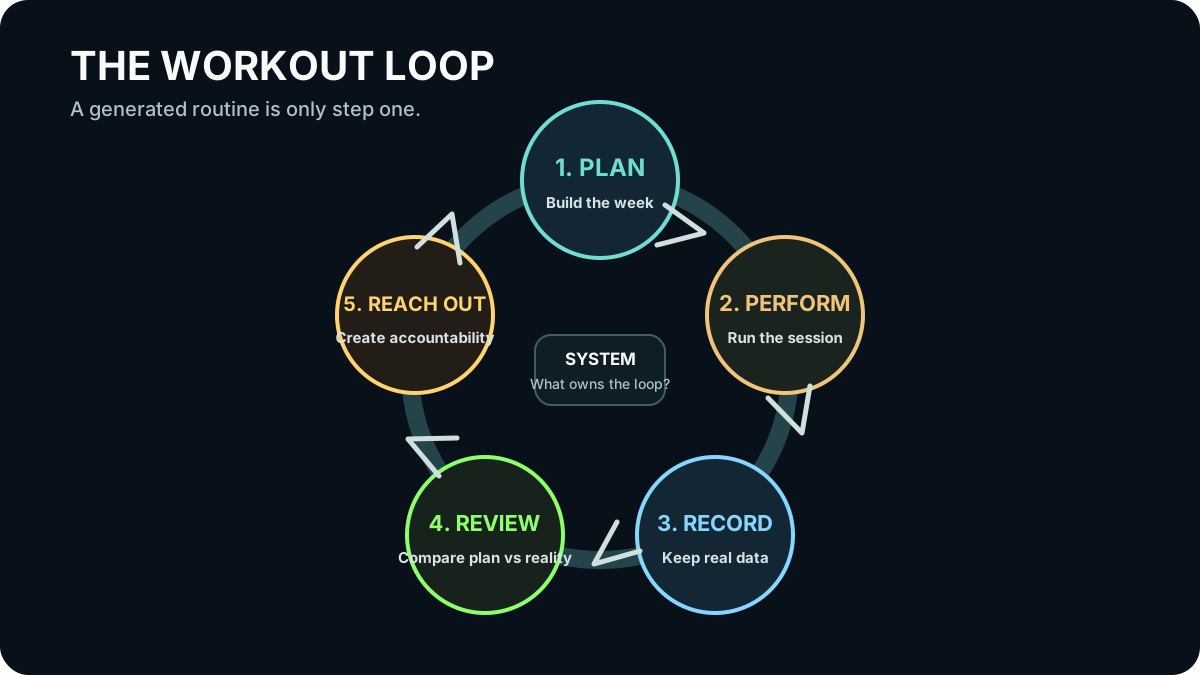
Before paying for another fitness subscription, write down which of these five jobs you actually need. You may discover that ChatGPT already covers the hardest one for you, or that your problem is not planning at all.
- Plan: turn goals, equipment, experience and available time into a sensible next week.
- Perform: make the workout easy to follow in the gym without juggling a long chat transcript.
- Record: keep sets, reps, loads, completed sessions and relevant notes in a form that can be reviewed later.
- Review: compare what was planned with what actually happened and decide what should change.
- Reach out: create accountability before or after the moment when consistency usually breaks.
If you only need the first job, a general assistant can be an efficient solution. If you need jobs two through four, a connected tracker becomes more valuable. If job five is the main reason you keep falling off, a product designed around accountability may be a better fit than adding another place where you have to remember to ask for help.
Worked example: you miss Tuesday's workout
Suppose you planned four training days. Tuesday disappears because work runs late.
With ChatGPT alone
You can explain what happened and ask for a revised week. That is a perfectly reasonable use. The quality of the answer depends on the context you provide: which sessions matter most, what you already completed, how much time is left, what equipment is available, and whether moving a session creates a recovery problem.
With ChatGPT connected to a workout app
The conversation can become more grounded when the app exposes your actual sessions and lets the assistant work from structured history. Hevy's current plugin shows how that model can work: the chat can analyze prior performance and create or save routines while Hevy remains the workout log.
With a dedicated coaching app
The value proposition is different. The app can be designed around the assumption that missed sessions, changing schedules, equipment constraints and accountability are normal parts of training. The user does not have to rebuild that workflow from separate tools every time.
None of those architectures is automatically superior. The best one is the one that owns the jobs you are actually tired of managing.
When ChatGPT alone is probably enough
- You want a starter routine, exercise substitutions or an explanation of how a training concept works.
- You already use a spreadsheet, notebook or tracker consistently and do not mind moving information between tools.
- You are comfortable judging whether a generated suggestion fits your technique, training history and constraints.
- You do not need the software to contact you before a workout or review your day automatically.
- You prefer a flexible general assistant because fitness is only one of many things you use it for.
In that situation, buying a second AI layer may add little. A good workflow can be as simple as keeping the structured log you already trust and using ChatGPT for questions that benefit from reasoning.
When a dedicated fitness app becomes more useful
- You want set-by-set logging and training history without maintaining the structure manually.
- You want a plan that is meant to change after completed or missed sessions.
- You want workouts, meals or recovery constraints to influence future planning inside the same product.
- You need a gym-friendly execution surface rather than a long conversation.
- You want accountability features that can act without waiting for you to remember to open a chat.
This is also why “ChatGPT versus fitness app” is becoming the wrong mental model for some people. The market is moving toward combinations: a general assistant on top, with a purpose-built app underneath it for data and execution. Hevy is one current example. Simple Muscle is another product explicitly built around connecting an assistant to structured workout plans and history.
Where IZEM fits
IZEM is for a different version of this problem. Its verified product scope combines personalized workout planning, practical meal planning, progress review, adaptation and accountability. It also supports proactive two-way voice calls for pre-workout accountability and end-of-day review, plus optional food, body-progress and gym-equipment scanning.
That makes IZEM a better candidate when the missing job is not “give me a workout idea” but “help me keep the plan alive when my week changes.” That coordination is especially valuable for multi-variable goals like a body recomposition plan, where resistance training progression and calorie targets have to adjust together instead of living in disconnected tools. It is not automatically the right choice for someone who simply wants a clean set-and-rep logger, a social workout feed, or occasional training questions. In those cases, a focused tracker or ChatGPT plus an existing log may be simpler.
Important boundary: neither ChatGPT nor IZEM should be treated as a substitute for medical care, injury diagnosis, physiotherapy, or professional judgment where those are needed. For pain, injury, medical conditions or symptoms that concern you, use a qualified professional.
Related IZEM guides
Sources checked
- OpenAI Help Center: Health in ChatGPT, checked September 21, 2026.
- Hevy: App Plugin for ChatGPT, checked September 21, 2026.
- Simple Muscle: AI-connected workout tracker, checked September 21, 2026.
- IZEM product claims checked against the repository's canonical first-party product-facts contract on September 21, 2026.
Want the coaching system to own more of the loop?
If your problem is follow-through rather than generating another routine, IZEM is designed to connect workout planning, meal planning, progress review, adaptation and proactive accountability calls in one coaching product.
See how IZEM worksThis article compares software workflows, not medical or clinical care. Product integrations change quickly; verify current availability and permissions with each provider before relying on a connection.