Watch the video guide
A short IZEM video guide for the decisions in this article.
Direct answer: choose an AI workout generator if you need a starting routine and can adjust it yourself. Choose an adaptive workout planner if you need the plan to change after logged sets, missed sessions, crowded gyms, soreness, schedule changes, and real meal patterns. IZEM sits in the broader planner-plus-coach category: workouts, meals, scans, day reviews, coach memory, weekly adaptation, and optional proactive calls.
Scope: this is general fitness planning guidance, not medical advice. An app can organize workouts and accountability, but it cannot diagnose pain, watch every rep in person, provide injury rehab, or replace a qualified professional when you need individualized care.
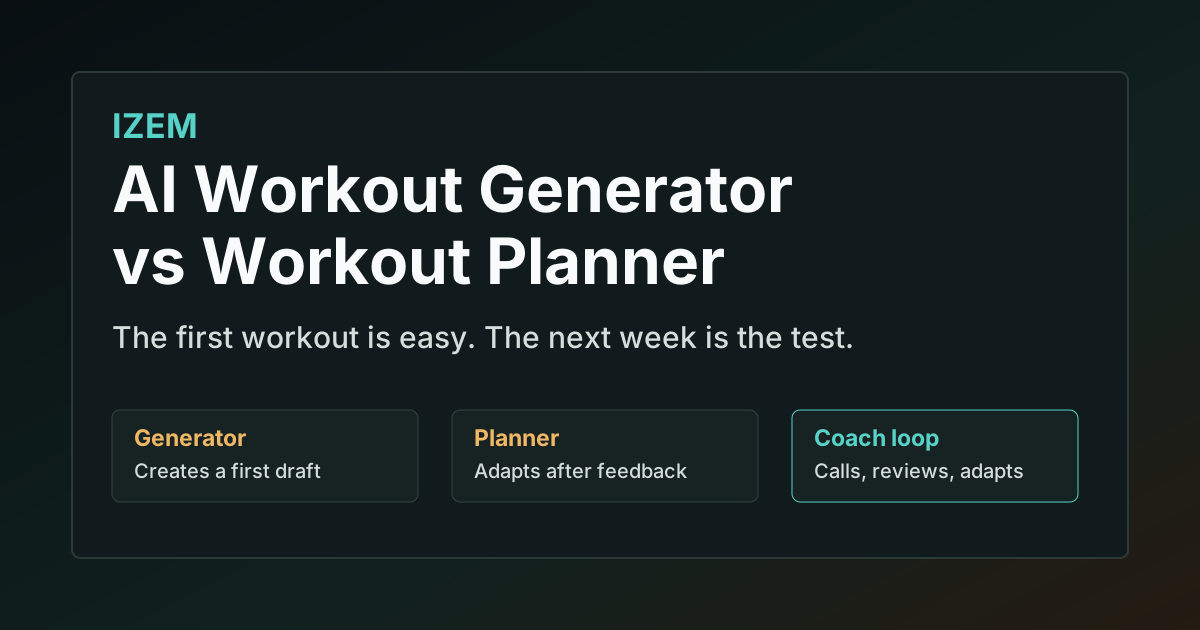
Most AI workout pages answer the easy question: "Can this make me a workout?" The harder question is quieter and more useful: "What happens when I do not follow the plan exactly?"
That second question is where the difference between a generator and a planner becomes obvious. A one-time generator can still be helpful. It can save you from a blank page, organize a basic split, and choose exercises from your equipment list. But after you train, skip, swap, stall, travel, or run into a packed gym, the static output starts to age.
An adaptive planner has a harder job. It has to treat your actual week as input. That means the plan should learn from completed sets, missed workouts, feedback, equipment reality, meal timing, recovery, and the moments where motivation went missing.
The simple difference
| Tool type | What it does well | Where it usually breaks |
|---|---|---|
| AI workout generator | Creates a workout or multi-week routine from a prompt, goal, schedule, and equipment list. | Often becomes static after the output. You still decide what to change when the week goes off plan. |
| AI workout planner | Uses ongoing feedback to adjust sessions, exercise choices, weekly volume, intensity, and progression. | Still depends on honest logging, clear safety boundaries, and useful context from the user. |
| AI personal trainer | Adds coaching behavior: accountability, reviews, memory, workouts, meals, scans, and explanation. | Cannot replace in-person form coaching, medical care, or specialist judgment for pain and injury. |
The naming can be messy because some products use "generator" and "planner" interchangeably. Ignore the label for a moment. Look for the feedback loop. Does the app know what happened last time? Does it change the next workout for a reason? Does it tell you why?
Use the Generator Ceiling Test
This is the link-worthy audit I would use before paying for an AI workout subscription. Score each question from 0 to 2. The total tells you whether the product is mainly a static generator, an adaptive planner, or a coach-like system.
Generator Ceiling Test
Score the AI workout tool you are considering. This runs locally in your browser and does not send your selections to IZEM.
When a generator is enough
Before starting, prepare a training brief and check your first AI workout against your actual schedule, equipment and recent training.
A generator is useful when the risk is low and the user can judge the plan. For example, you might only need a three-day full-body routine, a travel workout, a dumbbell session, or a fresh way to organize exercises you already know.
That can be plenty if you are consistent, comfortable with technique, and honest about your recovery. The generator gives you a first draft. You bring the coaching judgment.
Good generator fit
- You already know your safe exercise substitutions.
- You are comfortable adjusting sets, reps, and load yourself.
- You mainly need a starting template, not accountability.
- You do not need meal planning, daily review, or coach memory.
When you need a planner instead
A planner becomes more valuable when the plan needs to survive contact with a real week. Missed sessions, late meetings, soreness, travel, meal chaos, and unavailable equipment are not edge cases. They are the normal operating system of adult fitness.
A planner should notice patterns and make the next decision easier. If Monday workouts keep failing, it should adjust timing, length, or the accountability cue. If your shoulder feels irritated, it should avoid pretending that a chatbot can clear you for pain and should point you toward appropriate human help. If a lift stalls, it should consider load, reps, sets, recovery, and exercise choice instead of blindly chasing more weight.
The overlooked job: accountability before the plan breaks
Most workout software assumes the user will open the app at the perfect time. That is a brave assumption. The more common story is that the workout is lost in the handoff between intention and action: the commute ran long, the gym bag is in the other room, dinner is vague, and the phone notification is easy to dismiss.
This is where IZEM's call-based angle is different from a normal generator. The call does not exist to nag. It exists to create one decision before the workout disappears: full workout, smaller fallback, or honest reschedule. The day review then captures what happened while the details are fresh, so the weekly plan can change around the pattern.
Planner vs generator comparison table
| Decision | Static generator behavior | Adaptive planner behavior | Coach-like behavior |
|---|---|---|---|
| Workout creation | Builds the first plan from goals, days, and equipment. | Updates future sessions from actual training feedback. | Explains why the week changed and what to focus on next. |
| Progression | May include a generic "add weight" instruction. | Adjusts load, reps, sets, or exercise selection from results. | Connects progression to recovery, missed sessions, and consistency. |
| Equipment access | Assumes the listed equipment is available. | Offers substitutions when the planned setup does not fit. | Uses equipment context to keep the session moving in real time. |
| Missed workouts | Leaves the plan unchanged. | Reschedules or shrinks the week. | Reviews why the miss happened and changes the friction point. |
| Meals | Usually separate or absent. | May connect nutrition targets to training days. | Turns food scans, preferences, and day reviews into practical meal adjustments. |
Where IZEM fits
IZEM is positioned as a premium AI personal trainer and accountability coach, not a cheap tracker. It makes the most sense when you want the workout plan, meal plan, scans, calls, reviews, and weekly adaptation to live in one coaching loop.
At around $24.99/month, with the annual plan as the best value, the bet is not that AI is magically better than every human trainer. The bet is that many people need consistent, context-aware support between human appointments or instead of paying hundreds per month for coaching. They need the plan to keep changing with the week.
That also means IZEM is not always the right answer. If you only want a free prompt-generated workout and will manage progression yourself, a simple generator may be enough. If you need live form correction, injury rehab, medical nutrition therapy, or sport-specific assessment, use a qualified human professional.
Strength planning should be gradual
Good planning is careful about progression. The American College of Sports Medicine's resistance-training position stand describes progression through multiple variables, including load, repetitions, sets, frequency, rest, and exercise choice. Its PubMed abstract also notes a common load-increase range when the current workload can be exceeded by one to two repetitions.
The CDC's adult activity guidance also keeps the baseline simple: adults should include muscle-strengthening activity on at least two days per week as part of a balanced activity routine. That does not mean every user should chase aggressive progression. A useful app should start from the user's current level, keep increases gradual, and leave room for human judgment. If your goal is simultaneous muscle gain and fat loss, follow our body recomposition guide to balance progressive resistance training with calibrated nutrition.
Worked example: same prompt, different month
Week one prompt: "Build me a three-day gym workout for muscle gain with machines and dumbbells."
Generator output: a reasonable full-body split with sets, reps, and rest periods.
Planner output after two weeks: the app notices that the Friday session was skipped twice, the leg press was always busy, and the user completed dumbbell presses comfortably. It moves the third workout earlier, swaps the leg press for a matched pattern, and nudges the dumbbell target carefully.
Coach-like layer: the coach calls before the newly scheduled session, asks whether the earlier time still works, reviews meals and energy that evening, and remembers the Friday pattern next week.
FAQ
What is the difference between an AI workout generator and a workout planner?
An AI workout generator usually creates a starting workout or program from inputs such as goal, schedule, and equipment. A workout planner should keep using feedback from completed sessions, missed days, available equipment, and recovery signals to adjust future workouts.
When is a simple AI workout generator enough?
A simple generator can be enough when you only need a starting routine, already know how to judge exercise technique, and are comfortable adjusting the plan yourself after missed sessions or stalled progress.
When should you choose an adaptive workout planner?
Choose an adaptive planner when the hard part is keeping the plan useful after real training data arrives: missed workouts, crowded gyms, soreness, schedule changes, progress stalls, or inconsistent meals.
How does IZEM fit this comparison?
IZEM is positioned as a premium AI personal trainer and accountability coach. It combines workout planning with proactive calls, day reviews, practical meal plans, food scanning, body progress scanning, gym equipment scanning, coach memory, and weekly adaptation.
Related IZEM guides
Choose the loop, not just the output
IZEM is for people who want an AI personal trainer that can call, review the day, support realistic meals, remember context, and adapt the workout plan every week.
Explore IZEM AI Fitness Coach