Watch the video guide
A short IZEM video guide for the decisions in this article.
Build your middle back with controlled rows and reverse flyes
For a manageable middle-back workout, start with a row you can control and a light reverse fly. Keep your torso steady, let your shoulder blades move comfortably, and record the setup so you can repeat it. You can use dumbbells, a cable machine or a resistance band.
What you're training
People often use “middle back” to mean the muscles around and between the shoulder blades, including the rhomboids and middle trapezius. Rows also involve your lats and arms. A reverse fly adds work for the back of your shoulders. You don't have to isolate one muscle perfectly to train this area.
Strength training and pain treatment need different decisions. Gentle stretches or shoulder-blade squeezes may belong in a clinician's plan, but they aren't interchangeable with loaded rows. If you're starting because of persistent pain or an injury, ask your healthcare professional which movements suit you. Stop an exercise that causes pain. Mayo Clinic's back-exercise guide explains that boundary.
Choose your row
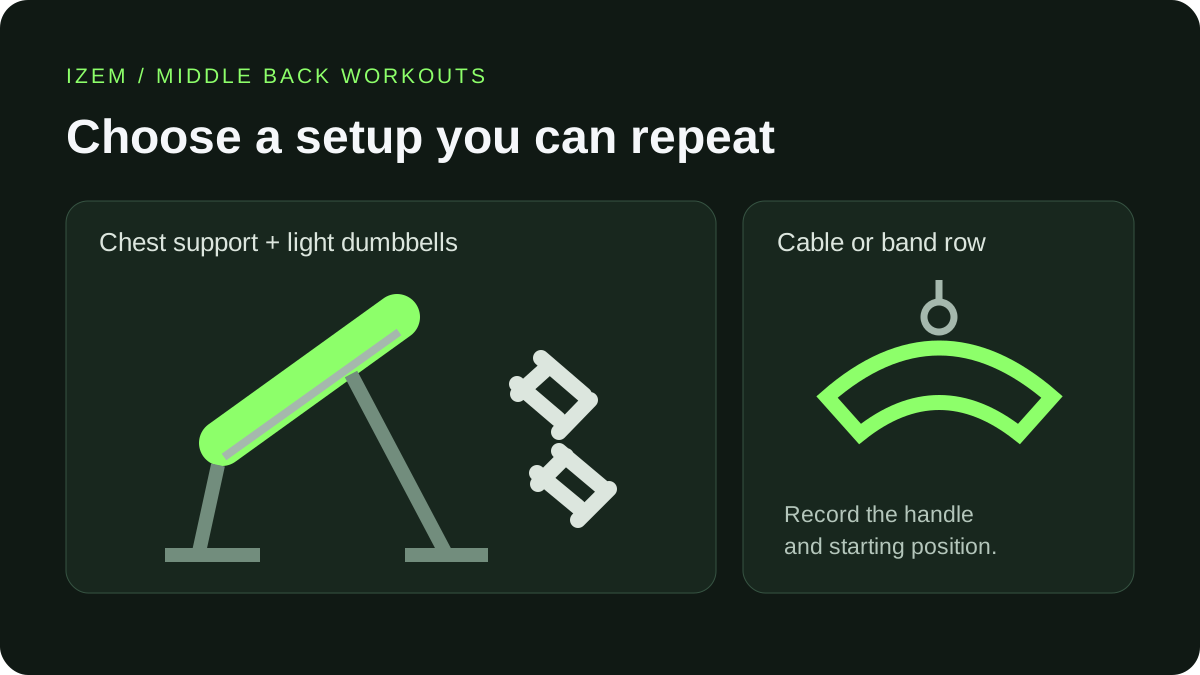
Use the option you can set up reliably. Chest support can be useful when holding a bent-over position distracts you from rowing.
| What you have | A practical choice | Keep consistent |
|---|---|---|
| Dumbbells and an adjustable bench | Chest-supported dumbbell row | Bench angle and chest position |
| A cable station | Seated cable row | Handle, seat and foot position |
| A supported row machine | Machine row | Seat height and handle choice |
| A resistance band at home | Seated band row | Band and starting stretch |
For band work, inspect the band and follow its manufacturer's setup instructions. Don't improvise an anchor from unstable furniture. If you need a whole-body suspension session instead, use the separate TRX workout guide.
A small session to start with
This introductory strength example is for healthy adults. Warm up with a few minutes of easy activity, then rehearse your chosen row with light resistance.
| Exercise | Starting work | Rest |
|---|---|---|
| Your chosen row | 1 set of 12 to 15 controlled repetitions | About 2 minutes before more work |
| Light incline reverse fly | 1 set of 12 to 15 controlled repetitions | Rest until you can repeat the movement steadily |
Choose resistance that makes the last repetitions challenging while you can still control them. You don't need to force a failed repetition. If this becomes manageable and you're recovering well, a second row set is one possible next step.
Count any rows and reverse flyes already in your plan before adding these. Put the work into your existing sessions, leaving a full day before training the same muscles again. Keep training the rest of your body too. ACSM's 2026 guidance emphasizes all major muscle groups at least twice weekly and a program you can sustain.
Make the repetitions repeatable
For a seated row
Sit with your knees slightly bent and your back in a comfortable neutral position. Draw your elbows back beside your ribs without swinging your torso. Pause briefly, then return slowly. Let the shoulder blades come together on the pull without forcing a hard pinch or tensing your neck. These cues follow the ACE seated-row instructions and Mayo's band-row demonstration.
For an incline reverse fly
Use light dumbbells and a stable bench with the backrest at 45 to 60 degrees. Keep your chest supported and feet planted. With a slight bend in your elbows, raise your arms out to the sides toward shoulder height, within a comfortable range. Lower slowly. Keep your chest on the pad instead of arching away from it. ACE's reverse-fly guide shows the setup.
If you can't maintain that position, reduce the load. A supported reverse-fly machine is another option if you can adjust it comfortably; ask a gym instructor to check the fit.
When a row doesn't feel right
Your arms will work during rows. Feeling them tire doesn't prove that your back has stopped working. Check what you can observe: a steady torso, a controlled return and a comfortable shoulder position.
If you start heaving backward or twisting to finish, reduce the weight and repeat the set another time. If holding the bent-over position is the limiting task, try a supported row. Pain calls for stopping and getting appropriate advice, not adding more weight or forcing a bigger squeeze.
Track your progress
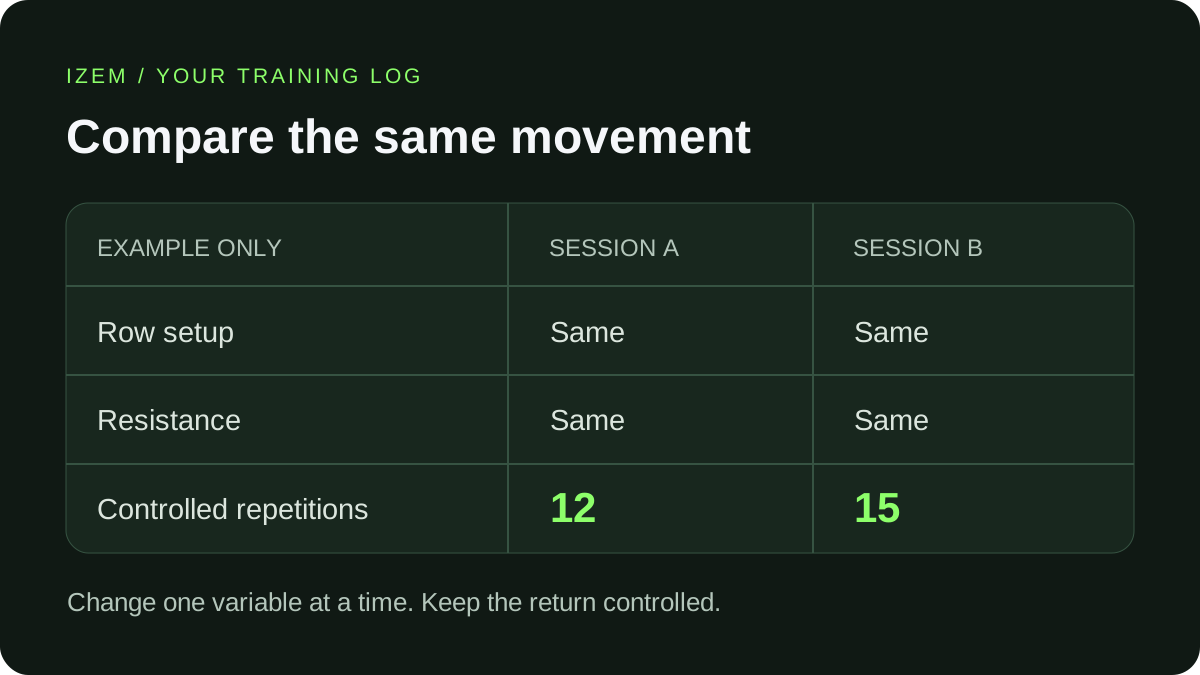
Record the exercise setup as well as the weight. A higher cable-stack number means little if you also shorten every repetition.
Row variation and setup:
Resistance:
Controlled repetitions in each set:
What stopped the set:
One change for next time:
For example, suppose your row progresses from 12 controlled repetitions to 15 at the same resistance. Once extra repetitions feel manageable with the same movement, try a small increase and build back up. With a band, record any change in band strength or starting stretch. Change one variable at a time so the comparison stays useful. Mayo's strength-training guidance supports gradually increasing resistance as repetitions become easier.
If you want help fitting this work around your schedule, IZEM can adapt workout planning around equipment, recovery and consistency. Keep these setup and repetition notes in your training log.