Short answer: IZEM is a workout reminder app that can call before the gym or a home workout. The useful part is not the ringtone. It is a call that knows today's plan, helps you choose the full workout, a smaller fallback, or a real reschedule, then remembers what happened for the next review.
About this guide: This is an IZEM-owned product guide written by the team building the app. The framework below is our product-design point of view, not a clinical claim or a published performance study. Read our editorial policy and about page.
Most missed workouts are not memory failures. You remember the plan. Then 6:00 PM arrives with an unfinished email, no clean gym clothes, a crowded commute, and a session that suddenly feels too large.
That is a decision problem. A standard notification can repeat the appointment, but it cannot decide whether you should do the full session, a 20-minute version, or an honest reschedule. A workout reminder call is worth considering when you need help at that decision point—not another badge on your lock screen.
Best setup if you ignore workout notifications
If your phone already sends too many alerts, do not add more noise. Use a call only at the skip point: the last moment where a smaller workout could still happen.
- Use an alarm when the problem is simple timekeeping and you already know what to do.
- Use a push notification when a light cue is enough to open the app or start a short habit.
- Use a workout reminder call when you need a live decision: full workout, fallback workout, or a specific reschedule.
- Use a human coach when you need hands-on form feedback, specialist judgment, or support for a health concern.
The best workout reminder setup is usually one call window, one fallback session, and one same-day review. More calls rarely fix the plan if the first one does not learn from what happened.
Calls vs alarms: pick the right reminder type
The phrase “app that calls you” covers several different experiences. Some products are exercise timers. Some send SMS or app nudges. Some add social pressure. A coaching call is different because it should settle the workout decision while there is still time to act.
| Mechanism | What it does well | What it usually leaves to you | Best fit |
|---|---|---|---|
| Calendar alarm | Marks a time reliably. | Choosing the workout and overcoming the start. | You already train consistently. |
| Fitness push notification | Keeps the app and streak visible. | Responding when the original plan no longer fits. | You want a light nudge. |
| SMS, email, or WhatsApp reminder | Reaches you across more channels than a single app notification. | Changing the session when your day has changed. | You mostly need delivery reliability. |
| Recorded reminder call | Creates a harder-to-miss interruption. | Having a two-way decision or changing the session. | You mainly need a louder cue. |
| Social accountability app | Adds visibility, a partner, or a public commitment. | Private coaching when you do not want social pressure. | You like external stakes and partner check-ins. |
| AI coaching call | Can connect timing, today's session, a fallback, and follow-up. | Doing the workout and raising safety concerns a coach cannot assess remotely. | You need contextual accountability. |
| Human trainer | Can observe, coach technique, and exercise judgment in person. | Daily availability between sessions, depending on the service. | You need hands-on or specialist support. |
A cheap or free alarm is the honest choice if timekeeping solves the problem. The premium case begins when the app can help you make the decision and carry context into the next plan.
The call has three decisions to resolve
At IZEM, we think a pre-workout call should close three open loops quickly. A longer motivational speech is usually less useful than three clear answers.
“A workout call earns the interruption when it removes a decision. If it only repeats the time, it is an expensive ringtone.”
The Pre-Workout Call Brief: a five-point test
Use this scorecard to evaluate any workout reminder call—including IZEM's. Give one point for each item the call can handle. A score of four or five suggests a coaching handoff. Two or three is a stronger reminder. Zero or one means an alarm may do the same job.
Here is a copyable brief you can use with an app, a human accountability partner, or your own calendar:
Link-worthy hook: The One-Call Rule for reminder fatigue
- Keep one primary reminder window. If it fails for five sessions, move it. Do not add a second call.
- Require one first action. The call must end with a physical move that starts in under 60 seconds.
- Require one fallback. Every session includes a shorter, realistic version before the call starts.
- Require one review anchor. If the call does not improve tomorrow's plan, stop the calls.
Find the decision window, not the perfect reminder time
“Call me at 6” sounds specific, but it may still miss the moment that matters. Work backward from where the plan normally disappears.
| Your pattern | Better call window | What the call should settle |
|---|---|---|
| You get trapped in one more work task. | Ten minutes before the end of your realistic workday. | The stop-work cue and first movement toward training. |
| You sit down at home and do not restart. | Before the commute ends or before you enter the house. | Gym, home fallback, or a concrete later slot. |
| The full workout feels too long. | Before the first “I do not have enough time” calculation. | The minimum session that still counts today. |
| You arrive and the equipment is busy. | At arrival or just before the session. | The session goal and acceptable exercise swaps. |
| You keep making an unrealistic weekly plan. | During the day review, not only before training. | What should change in next week's plan. |
If you need help finding the pattern, the workout consistency calculator turns recent misses into a simple timing and fallback review. It is a planning aid, not a prediction of results.
What a useful call can sound like
These are illustrative scripts, not recordings or user results. Notice that the call is short and ends with a decision.
After-work example: “You planned upper body at 6:15. Are you leaving the desk in ten minutes? If work needs another half hour, use the home fallback: push-ups, one-arm rows, and shoulder presses. Which version are we starting?”
Crowded-gym example: “Today is lower body. Keep the training goal, not the exact machine. If the leg press is occupied, start with the available squat pattern and we will reorder the session. What is free in front of you?”
The call does not need to pretend every obstacle is an excuse. Sometimes sleep, illness, pain, or a genuinely overloaded day means the right decision is to stop or seek qualified guidance. Good accountability leaves room for that.
Where IZEM fits
IZEM is designed as a premium AI personal trainer and accountability coach. Its proactive AI voice calls sit inside a larger loop: the coach reviews your day, keeps context from workouts and meals, and adapts the workout and practical meal plan every week.
That context can include your schedule, recent sessions, food scans, body-progress scans, and the equipment you have available. It is what lets a call move beyond “go work out” toward a realistic next step.
At around $24.99 per month, with the annual plan intended as the best value, IZEM is not priced like a reminder utility. It is for someone who wants planning, calls, daily check-ins, scans, and weekly adaptation in one coaching relationship. If all you need is an alarm, use the alarm.
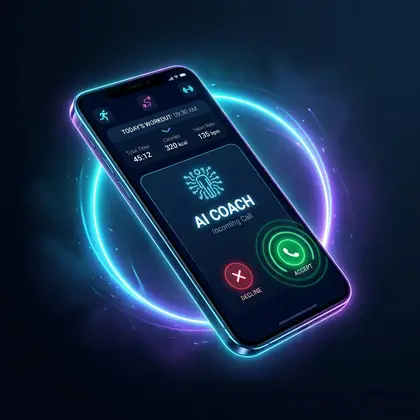
When a calling reminder is worth it—and when it is not
A call-based system is a strong fit when you repeatedly ignore notifications, lose the workout during a predictable transition, or need a smaller fallback before you can start. It is also useful when you want the same coach to review the miss instead of resetting a streak and moving on.
It is probably unnecessary if you already train automatically, dislike phone calls, work somewhere you cannot answer, or only need a calendar cue. A human coach is still the better choice when you need hands-on technique feedback, rehabilitation support, or professional judgment for a health concern.
A one-week setup that does not create reminder fatigue
- Review the last two misses. Write down the first moment each workout became unlikely.
- Choose one call window. Test only the most common failure point instead of adding calls everywhere.
- Write the fallback before the call. Decide what a 10-, 20-, or equipment-limited version looks like.
- End with movement. The call should finish on the first physical action, not another pep talk.
- Review after seven days. Keep the call only if it changed decisions or gave the next plan better context.
What if you miss the call?
Do not turn one missed call into six automated retries. Use one agreed backup window, then move the question into the day review: Was the timing wrong? Was the session too large? Was the equipment unavailable? Or was rest the sensible choice?
That boundary keeps the reminder page focused on the moment before training. For the broader product experience, read the fitness app that calls you guide. For what happens after the plan changes, use the guide to a fitness app that adapts after a missed workout.
Related IZEM resources
Frequently asked questions
Is there a workout reminder app that calls you?
Yes. IZEM can place proactive AI voice calls before planned gym or home workouts and use day reviews to keep future coaching connected to what happened. It is designed as a premium coaching system rather than a standalone alarm.
How is a workout reminder call different from an alarm?
An alarm only marks the time. A useful coaching call names the planned session, gives you a first action, offers a realistic fallback, and closes the loop if the original plan changes.
Can a workout reminder app call my phone before the gym?
Yes. A call-based fitness app can place a proactive voice call before a planned gym or home workout. The useful version does more than ring: it confirms the session, helps choose a full workout or fallback, and saves context for the next review.
What is the best workout reminder setup if I ignore notifications?
Use one call window at the predictable skip point, write the fallback workout before the call, and review the result later the same day. If timekeeping alone solves the problem, a calendar alarm is enough.
Can I use workout calls without feeling pressured?
The call should be scheduled with your consent, easy to change, and focused on a practical decision rather than guilt. A smaller session or an honest reschedule can be the right outcome.
What happens if I miss the workout call?
A missed call should trigger a simple fallback: try once in a backup window, offer a shorter session, or capture the reason during the day review. Repeated calls without new context become reminder noise.