Know the day type
Hard workout, short workout, late workout, rest day, and missed workout should not all get treated as identical days.
A meal plan is easier to follow when it knows whether today is a hard workout, a rest day, a late session, or a day where the workout quietly disappeared. Use the Meal Switchboard below to judge whether an app can handle that week.
Direct answer: the best workout-day meal planner app should not just print seven meals. It should connect meals to the training week, then adjust when the workout moves, turns into a rest day, or gets missed. IZEM fits people who want that inside a premium AI personal-trainer loop with calls, day reviews, food scanning, coach memory, and weekly adaptation.
Scope: this is a fitness meal-planning buyer guide, not medical nutrition advice. If you need care for a medical condition, pregnancy, eating disorder history, food allergies with significant risk, or sport-specific nutrition, use qualified professional guidance.
A short IZEM video guide for adapting workouts and meals around real life.
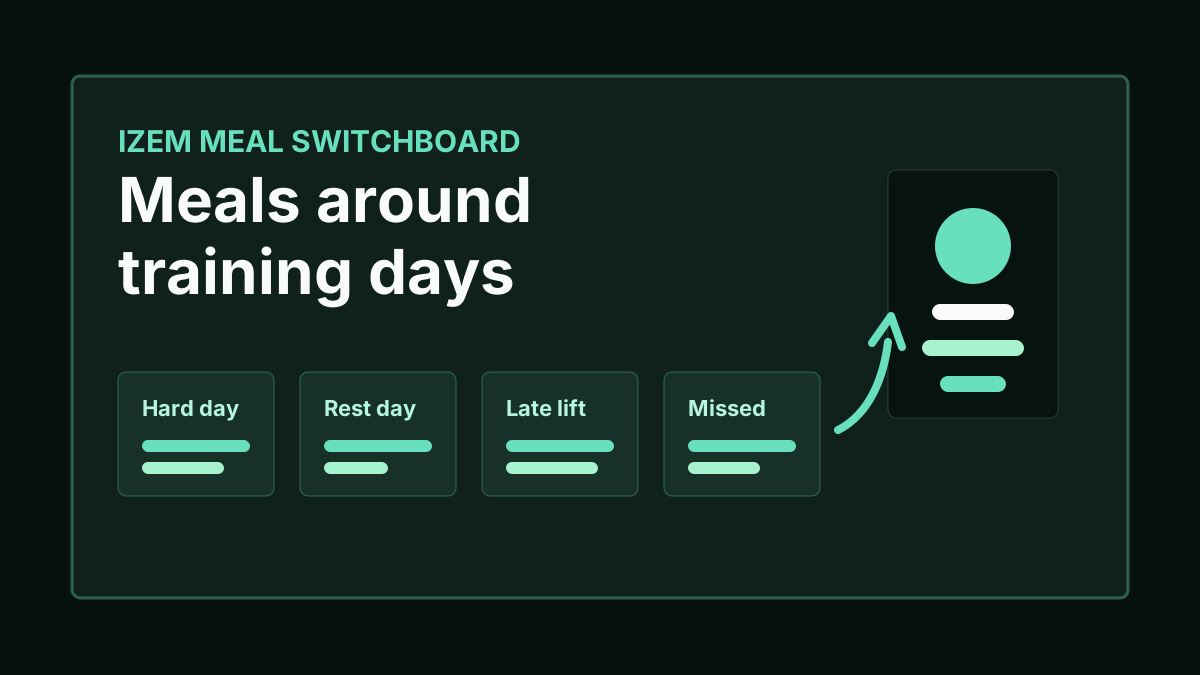
Most meal planners are built around a menu. Monday breakfast, Tuesday dinner, maybe a shopping list if the app is decent. That helps, but it does not answer the question people ask at 5:40 p.m. when the workout is still undecided: should dinner stay the same, get simpler, move later, or become tomorrow's lunch?
The gap is not about perfect nutrient timing. For everyday gym consistency, the first problem is much more practical: your food plan and training plan often live in separate tabs, separate apps, or separate mental piles. When one changes, the other pretends nothing happened.
A stronger app treats the meal plan as part of the coaching week. If leg day moves from Tuesday to Thursday, the plan should at least help you make a realistic food decision around that shift. If the workout is missed, the app should avoid guilt math and help you reset the next meal and the next session.
Choose the day you are planning for. The output gives you the coaching behavior to look for before you pay for an app.
A meal app does not need to micromanage every gram to be useful. It does need to keep the food plan connected to the week you are actually training.
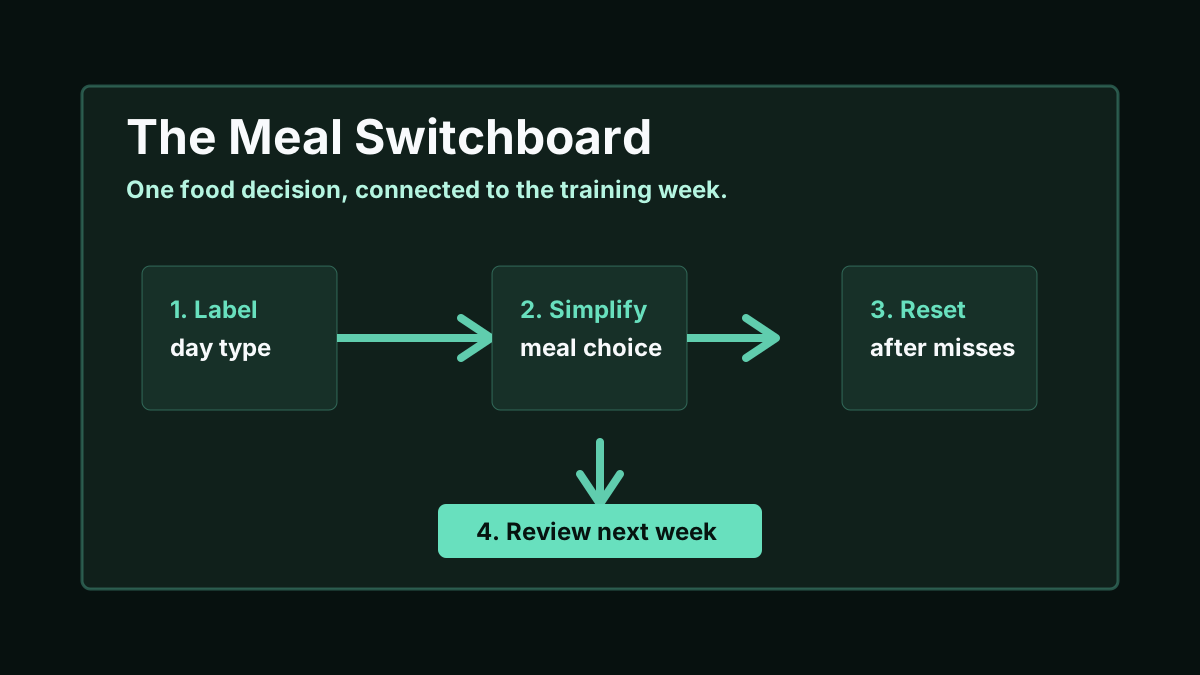
Hard workout, short workout, late workout, rest day, and missed workout should not all get treated as identical days.
When time is low, the app should shorten the meal decision instead of handing you a recipe project.
After a missed session, the next meal should support the reset rather than punish the miss.
The app should remember which meals, times, and blockers kept repeating.
| Question | Weak answer | Better answer |
|---|---|---|
| Does the meal plan know my workout schedule? | The app has both workouts and recipes, but they do not affect each other. | The app can see training days, rest days, skipped workouts, and schedule changes when helping you plan food. |
| What happens after a missed workout? | The plan stays rigid or tells you to make up for the day. | The app helps you reset the meal decision and the training week without turning one miss into a spiral. |
| Can I use the food I actually have? | You regenerate a perfect plan from scratch. | The app keeps the goal but swaps around groceries, prep time, and repeatable meals. |
| Does the plan get reviewed? | Completed meals are logged, but nothing changes. | The weekly review notices patterns and changes next week's plan. |
A broad comparison asks which product includes workouts and meals. That is useful, and IZEM has a separate guide to workout apps with meal planning included for that job. This page asks a narrower question: does the meal planner understand the difference between training days, rest days, moved workouts, and missed sessions?
It also differs from a general AI meal planner feature page. Feature pages explain what IZEM does. This guide gives you a checklist for comparing any app before you subscribe.
IZEM is built for people who do not want workouts, food, accountability, and progress review scattered across separate systems. The coach can call you, review your day, use food scans for context, remember your preferences, and adapt the next workout and meal plan each week.
That is why the product is positioned as a premium AI personal trainer and accountability coach, around $24.99/month with the annual plan as the best value, rather than a cheap calorie tracker. The value is not that the app has another recipe list. The value is that the meal decision is part of the same coaching conversation as the workout decision.
There is a real limit here. A consumer fitness app should not pretend to diagnose nutrition needs, treat medical conditions, or replace a registered dietitian when care is needed. It can still be useful by making the ordinary week easier: plan around groceries, time, preferences, training schedule, and the moment you are most likely to quit.
For practical meal-planning basics, USDA MyPlate recommends checking what food is already available, writing down meals, considering prep time, planning leftovers, and building the grocery list around the plan. Those simple questions are still the backbone of a useful AI meal planner.
It is a meal-planning app that uses the training week as context. At minimum, it should understand hard workout days, rest days, late workouts, short fallback sessions, and missed workouts.
Some people use different targets, but the safer first question is whether the plan is realistic. For general fitness, a useful app should help you plan meals you can actually follow before it gets clever with advanced cycling.
No. IZEM is a fitness coaching app for planning, accountability, and general meal support. Use qualified professional care for medical nutrition, eating disorder concerns, pregnancy, significant allergies, or sport-specific nutrition needs.
IZEM is designed to call you, review the day, scan meals, remember context, and adapt next week's workout and meal plan so you are not left fixing the week alone.
Explore IZEM AI Fitness Coach