Setup is possible
The app should not prescribe lifts that require gear you do not have, such as a rack-dependent squat without a rack.
A workout generator is only useful if it respects the bench, dumbbells, bands, machines, or crowded gym in front of you. Use the Equipment Reality Card to turn available gear into a realistic session and a smarter next-week plan.
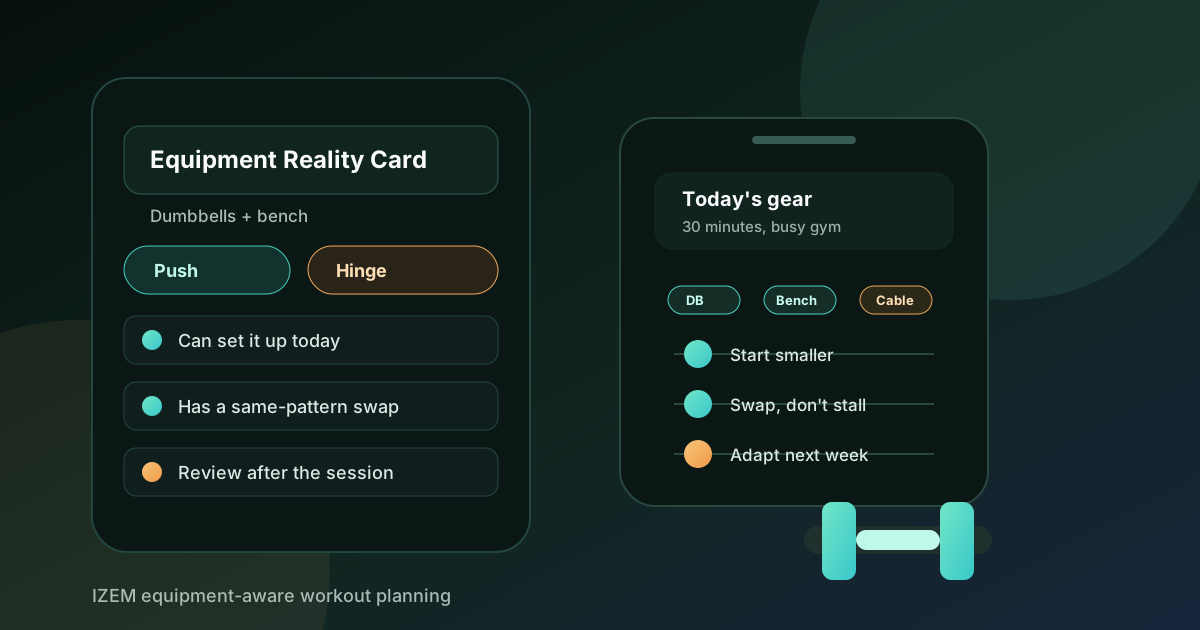
Direct answer: a workout generator by equipment should start with the gear you can use today, then build a balanced session with a setup you understand, a fallback if the gym is busy, and a review step for next week. Equipment filtering is the gate. Coaching is what keeps the plan useful after real life changes it.
Safety scope: this page gives general fitness planning ideas. It does not diagnose pain, provide rehab, replace in-person form coaching, or make medical nutrition decisions. Start conservatively, stop painful movements, and use qualified guidance when your situation needs it.
Most workout generators ask for a goal first. That sounds reasonable, but the first gym-floor problem is often simpler: can you actually set up the exercise the plan just gave you?
A barbell back squat is not a barbell-only exercise. It needs a rack. A bench press needs a bench. A cable row needs a cable station that is free. A home workout with one adjustable dumbbell needs different decisions than a commercial gym with machines, cables, and cardio equipment.
The best equipment-aware tools invert the order. They ask what you can use, protect the main movement patterns, and make the fallback part of the plan instead of leaving you to improvise when the room is full.
Choose your available equipment, time, goal, and likely blocker. The output is a browser-only checklist you can copy before comparing any workout generator.
The app should not prescribe lifts that require gear you do not have, such as a rack-dependent squat without a rack.
A session still needs a broad mix of squat, hinge, push, pull, and core or conditioning work.
If a machine is busy, the alternative should train the same broad pattern instead of adding random volume.
The next plan should notice repeated blockers: busy benches, missing cables, short sessions, or low-energy days.
| Equipment reality | Good generator behavior | Common failure |
|---|---|---|
| Bodyweight only | Uses slower tempo, single-leg options, push-up variations, core holds, and a realistic conditioning block. | Prints a long list of easy reps and calls it progression. |
| Dumbbells and bench | Builds around presses, rows, split squats, hinges, carries, and simple load progression. | Assumes a barbell, cables, or machines will appear later. |
| Barbell without rack | Allows deadlift, row, press, and floor-based work while avoiding rack-dependent lifts. | Programs back squats because "barbell" was checked. |
| Machines and cables | Uses clear station alternatives when the gym is busy. | Freezes when the exact station is taken. |
| Hotel or travel setup | Overrides today's gear without rewriting your whole training identity. | Deletes the week or restarts the program from scratch. |
The first output is only a draft. The important pattern appears after a few sessions: maybe the cable station is always busy after work, maybe your home dumbbells are too light for lower-body work, or maybe the 45-minute plan keeps failing on Tuesdays.
A normal generator may keep printing the same ideal plan. A coaching system should treat that friction as useful information. In IZEM, the workout plan can sit inside a broader loop: proactive calls before the decision point, gym-equipment context, day review, coach memory, practical meal planning, body-progress scanning, food scanning, and weekly adaptation.
Situation: you planned an upper-body workout, but every bench is taken and you have 30 minutes.
Weak generator: tells you to wait, skips the bench movement, or replaces it with whatever exercise happens to be in the library.
Better generator: keeps the pattern, offers a same-role swap, trims the accessory work, and saves the missed bench pattern for the next plan.
Better coaching loop: reviews that bench access is repeatedly failing after work, then changes next week's timing, equipment assumption, or fallback before you arrive.
IZEM is positioned as a premium AI personal trainer and accountability coach, not a cheap tracker. The product is built for the full handoff: generate a workout, call when the decision point arrives, adapt around available equipment, review what happened, and change next week's plan.
That is different from a one-off generator. A one-off tool can be useful when you only need today's session. IZEM makes more sense when the same blockers keep repeating and you want the plan to remember them.
It is a workout generator that starts from available gear, then creates a session that can actually be set up today. The useful version accounts for dependencies such as barbell plus rack, bench availability, machines, bands, dumbbells, bodyweight options, and travel setups.
Choose a simple generator if you need one starting session and already know how to adjust it. Choose an adaptive planner when missed workouts, busy equipment, schedule changes, recovery, and progression need to affect the next session.
It can organize general training and reduce gym-floor confusion. It cannot watch every rep, spot heavy lifts, diagnose pain, or replace qualified care. IZEM is best understood as premium coaching software for planning, accountability, review, and adaptation.
IZEM is for people who want workouts, meals, calls, scans, day reviews, and weekly adaptation in one coaching loop, so you do not have to fix the week alone.
Explore IZEM AI Fitness Coach